


Indonesia Forestry: Transforming Commercial Forest Governance to Meet Global Climate, Peatland, and Biodiversity Benchmarks

Explore how Indonesia's commercial forestry sector is transforming through peatland governance and biodiversity benchmarks, with insights into operations at PT Mayawana Persada.
Indonesia’s forestry sector is undergoing a profound structural evolution. Driven by heightened international scrutiny, stricter global climate frameworks, and demanding ESG benchmarks, commercial forestry governance has shifted decisively from traditional timber extraction toward sustainable landscape management. Today, aligning industrial productivity with rigorous carbon, peatland, and biodiversity safeguards is no longer optional—it is the baseline for global market credibility.
The Shift Toward Science-Based Forest Governance
Global markets, investors, and multilateral environmental assessments increasingly require verifiable proof that commercial forestry operations protect tropical ecosystems rather than deplete them. This global paradigm shift has reshaped national forestry frameworks across Indonesia, pushing concession holders to adopt transparent, science-based methodologies.
Modern commercial forestry governance rests on three critical pillars:
- Peatland Hydrology Restoration: Maintaining strict water table benchmarks to prevent the oxidation of carbon-rich organic soils and mitigate subterranean fire risks.
- Strict High Conservation Value (HCV) Protection: Safeguarding designated zones of high ecological and social importance from industrial conversion.
- Landscape-Level Biodiversity Connectivity: Establishing green corridors that link protected habitats, ensuring safe migration routes and genetic exchange for endangered species.
Operationalizing Global Benchmarks on the Ground
Translating ambitious international climate and biodiversity targets into daily field operations requires rigorous, site-level execution. Across various concession landscapes in Indonesia, forward-thinking operators are modernizing their management systems to meet these standards.
For instance, companies like PT Mayawana Persada integrate science-based forestry principles into their daily protocols—such as maintaining precise daily water table controls in peat ecosystems, deploying non-invasive monitoring tools like camera traps in collaboration with academic institutions, and expanding protected conservation zones to align with regional biosphere reserve objectives.
By anchoring commercial activities in transparent multi-stakeholder frameworks, independent audits (such as IFCC, ISO 14001, and PROPER ratings), and continuous academic research, the sector demonstrates that industrial productivity and rigorous ecological preservation can successfully coexist.
Meeting Global Expectations
The transformation of Indonesia's commercial forestry governance signals a long-term commitment to global climate stability and biodiversity conservation. By institutionalizing rigorous peatland management, permanent habitat protection, and transparent multi-sectoral collaboration, the forestry sector continues to build a resilient, future-ready framework that satisfies international environmental benchmarks.
Read also
.jpeg&w=3840&q=75) Environment & Biodiversity
Environment & BiodiversityEndangered Area Ecology: Science-Based Strategies for Safeguarding Vulnerable Tropical Landscapes
Read more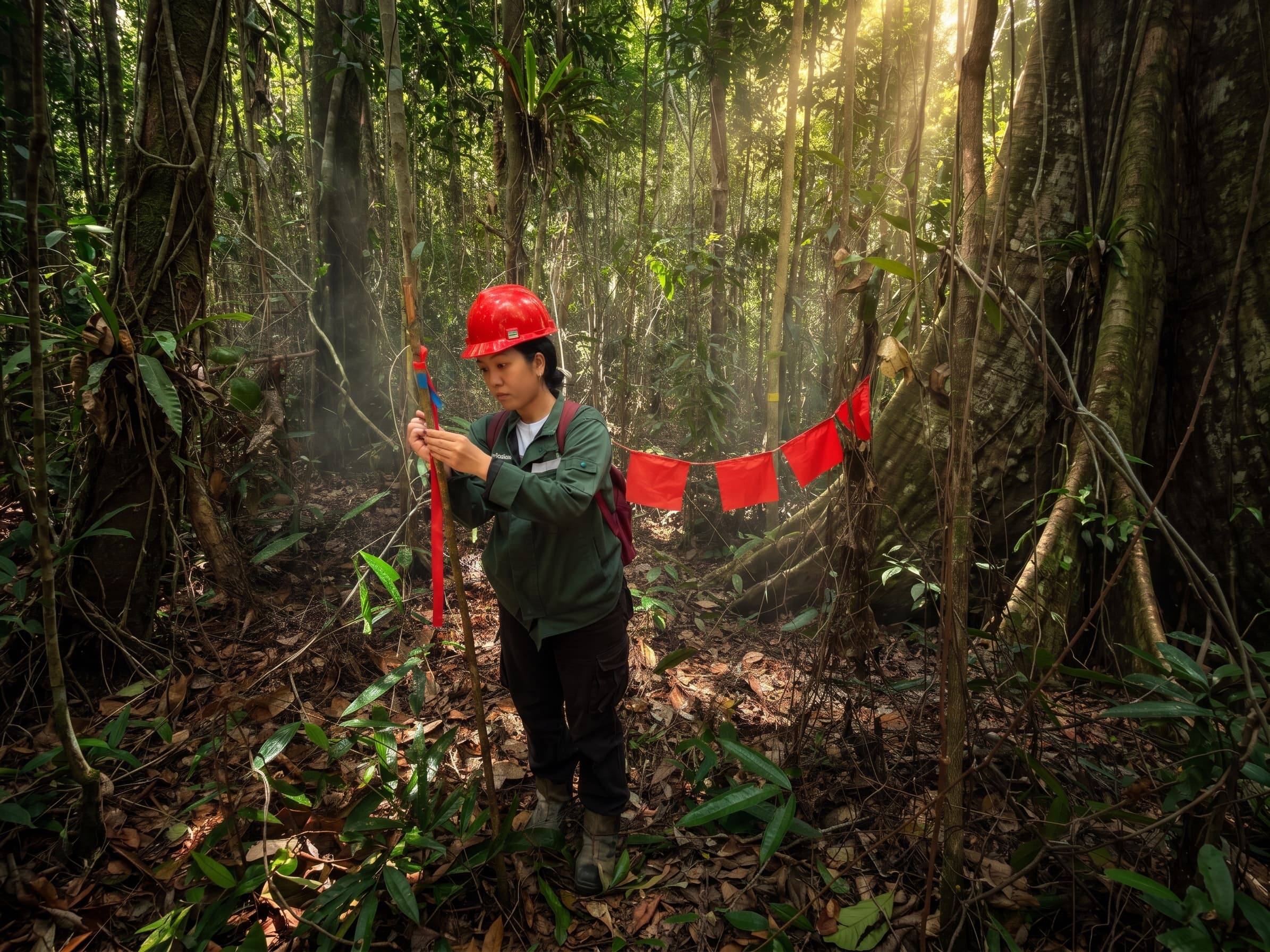 Environment & Biodiversity
Safeguarding Protected Wildlife Areas and Endemic Species Habitats
Read more Environment & Biodiversity
Unveiling the Bornean Orangutan: Characteristics, Behavior, Distribution, and PT Mayawana Persada’s Habitat Protection Efforts
Read more