


6 Essential Aspects of Water Management in Sustainable Forestry Operations
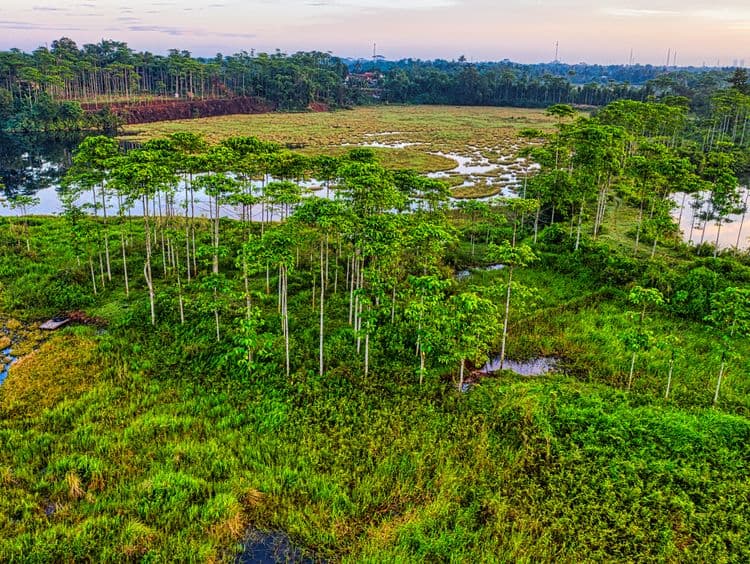
Discover how water management is systematically implemented in sustainable forestry operations, ranging from river monitoring to the protection of surrounding ecosystems and local communities.
In sustainable forestry operations, water is more than just a supporting element; it is a primary indicator showing how ecological balance is maintained amidst production activities. Every river flowing around a concession area plays a dual role: sustaining the forest ecosystem while serving as a lifeline for surrounding communities. Therefore, a systematic approach is key to ensuring this balance is preserved over time.
At PT Mayawana Persada (MP), this approach is translated into a water management system that runs from the planning stage, field monitoring, to continuous evaluation. Here is an overview of how the process is executed technically and operationally.
1. Regulations as the Primary Foundation
Every step of water quality monitoring at PT Mayawana Persada refers to Environmental Impact Assessment (AMDAL) documents, including the Environmental Management Plan and Environmental Monitoring Plan (RKL-RPL). These documents serve as benchmarks for determining sampling locations, testing methods, monitoring periods, and parameters that must be overseen during operational activities.
AMDAL is emphasized by Muharjan, Assistant Head (Askep) of Sustainability at MP, not merely as an administrative document, but as an obligation for any business with significant environmental impacts. Consequently, every stage of water management is bound by these regulations as a framework rather than treated as a mere paperwork formality.
2. Environmental baseline Conditions as Field Benchmarks
The target of the entire monitoring process is clear: to keep environmental conditions as close as possible to the "environmental baseline", which refers to the original state before operational activities began. Muharjan emphasizes that the target is to maintain the environment so it does not exceed baseline conditions, keeping it identical to or below the original state. This benchmark is paired with regulatory quality standards so any changes can be controlled measurably.
To ensure these benchmarks accurately reflect field conditions, monitoring is carried out at several river bodies deemed representative of potentially impacted areas, including Sungai Semirang, Sungai Kualan, Sungai Seman Kanan, Pantil, and Matamata. These locations were chosen based on initial assessments outlined in the AMDAL planning documents.
3. Dual Verification: External and Internal
A crucial aspect of water management at Mayawana Persada is its multi-layered verification mechanism. To maintain objective results, the company collaborates with accredited external laboratories, handling everything from sample collection to test result issuance. However, this does not mean the entire process is completely handed over to external parties.
The Mayawana Persada Environment team still conducts verification through personnel certified in Water Sampling Competency (PPC), specifically for monitoring Wastewater Treatment Plants (IPAL). With this combination of external and internal verification, test results can be justified from both sides, minimizing bias or technical errors from the outset.
4. Structured Water Quality Monitoring Schedule
Consistency is key to this system. River water quality is monitored twice a year, while IPAL wastewater is inspected monthly. For sensitive parameters, pH is measured daily using a pH meter, referencing a standard pH range of 6 to 9 in accordance with corporate technical approvals. Such a structured schedule ensures no gaps exist that might allow potential deviations to slip past oversight.
5. Handling Deviations: Follow-Up Procedures
To date, all monitored parameters remain below required quality standards. Even so, Mayawana Persada prepares follow-up procedures if a result ever exceeds threshold limits. The process starts with laboratory clarification, followed by up to three re-tests before moving into field investigation stages. "If a parameter is above the standard, we request re-testing up to three times," notes Muharjan.
Seasonal factors are also considered before conclusions are drawn. For instance, when total suspended solids (TSS) increase during rainy season sampling, the team does not immediately conclude pollution has occurred. Laboratory results are first evaluated by considering weather conditions, location characteristics, and surrounding river activities. This tiered approach shows that every decision in water management is based on verified data, not fleeting assumptions.
6. Preserving River Buffer Zones as Part of the System
Aside from water quality monitoring, the protection of river buffer zones is maintained according to boundaries established in AMDAL documents. Supervision of these areas is integrated into routine forest protection patrols, allowing multiple environmental aspects to be checked within a single operational workflow. Thus, water management does not stand alone but integrates with broader forest protection systems.
Water as a Shared Interest
Ultimately, this entire monitoring chain extends beyond mere regulatory compliance. Rivers surrounding the concession are preserved because local communities rely on them for clean water and livelihoods via fisheries.
This condition highlights why maintaining the quality and sustainability of rivers around the concession is so vital. Such conditions make water quality a shared interest rather than just corporate administrative compliance. For operations, a systematic water management framework—ranging from regulatory foundations, dual verification, structured schedules, to follow-up procedures—ensures that sustainable forestry remains aligned with ecological balance and community needs, today and in the future.
Want to learn more about our commitment and efforts in environmental preservation and water resource management? Check out the complete information here.
FAQ
What is the regulatory foundation for water management at PT Mayawana Persada?
Water management and quality monitoring are governed by environmental impact assessment documents, specifically AMDAL, along with the Environmental Management and Monitoring Plan (RKL-RPL)
How does the company ensure the accuracy and objectivity of its water testing?
PT Mayawana Persada uses a dual verification system, combining testing from accredited external laboratories with internal verification performed by certified Water Sampling Personnel (PPC)
How frequently is water quality monitored?
River water quality is monitored twice a year, wastewater from IPAL is checked monthly, and pH levels are measured daily using a pH meter.
How are river buffer zones protected?
River buffer zones are maintained according to AMDAL limits and are directly monitored as part of the company's routine forest protection patrols.
Read also
 Operations & Field Activity
PT Mayawana Persada Deploys Integrated Personnel and Infrastructure, Focusing Wildfire Suppression Toward Complete Extinction
Read more CSR & Community
Community-Based Conservation: Safeguarding Forest Sustainability Through Synergy with Local Communities
Read more Operations & Field Activity
Emergency Water Retention Basin Built in Padu Banjar as KPH Team Responds to New Wildfire Report During Site Inspection
Read more