


The Commitment to Safeguarding Conservation Areas for a Sustainable Forest Future
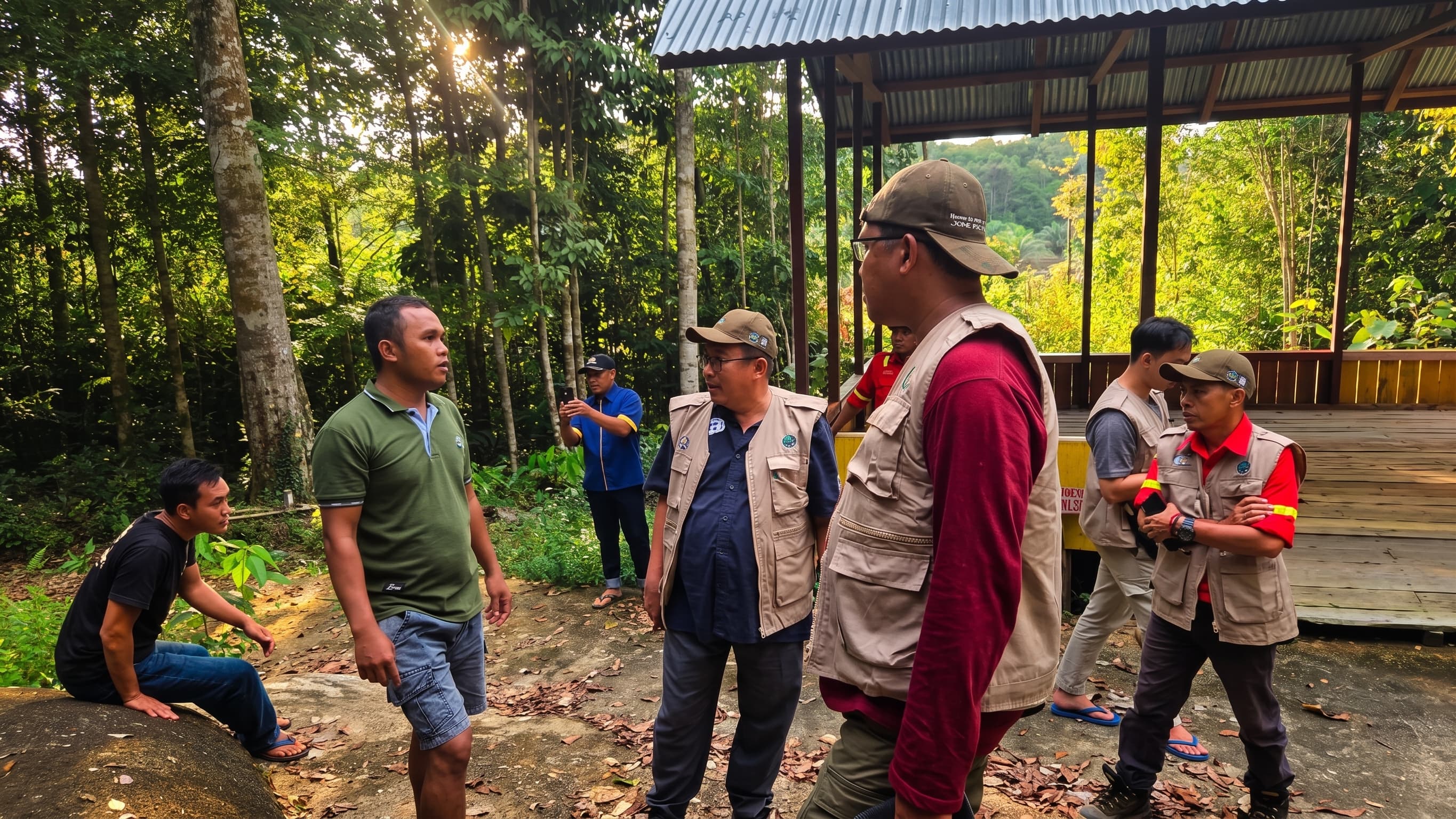
Discover how PT Mayawana Persada and UNTAN academics manage conservation areas in Borneo to safeguard biodiversity, culture, and local community well-being.
PT Mayawana Persada, alongside academics from Universitas Tanjungpura, preserves conservation areas (High Conservation Value / HCV) to ensure ecological balance, foster eco-tourism, and support the well-being of local communities.
In industrial forestry governance, concession management does not focus solely on production zones. Specific strategic areas must be strictly preserved to maintain ecosystem functions, protect biodiversity, and respect the social and cultural values of local communities. These designated zones function as essential conservation areas—a vital instrument within sustainable forest management standards.
Within PT Mayawana Persada’s concession, the existence of these conservation areas serves as a stabilizing fortress amid Industrial Plantation Forest (HTI) activities. Integrating these protected zones ensures that forestry development does not erode crucial ecosystem functions or compromise the social rights of communities depending on the surrounding landscape.
Scientific Foundations for Conservation Area Designation
The establishment of these conservation areas is not decided unilaterally by the company; rather, it is anchored in rigorous scientific studies conducted by independent academics. This process aligns with official government standards to identify ecosystem characteristics, biodiversity profiles, and territorial protection values.
One of the contributing academics providing vital recommendations is the Dean of the Faculty of Forestry at Universitas Tanjungpura (UNTAN), Dr. Ir. Farah Diba, S.Hut., M.Si., IPU. She explains that the indicators for determining conservation areas span a broad spectrum, reaching far beyond pure ecology.
"Conservation areas, or those also recognized through HCV standards, represent an instrument established by the government to identify regions carrying critical values that must be maintained. Some areas are designated for protection based on floral and faunal biodiversity, while others are grounded in local socio-cultural values," Farah explains from her office.
She adds that zones carrying historical and spiritual value for local residents must also be mapped into these conservation areas. "Regions holding cultural significance, such as sacred sites or traditional ancestral tombs, enter the protected category following thorough surveying, data collection, and analysis. Implementing conservation areas goes beyond mere regulatory compliance; it represents a deliberate effort to balance economic demands with environmental preservation," Farah continues.
For Farah, academic research serves as an essential baseline ensuring that corporate operations remain in balance between ecological functions and economic activities.

Community-Based Conservation Area Utilization
The designation of conservation area status often sparks misconceptions, leading some to assume the zone is entirely closed off and cuts off local livelihoods. In practice, the management of these areas aims to bridge ecosystem protection with sustainable socio-economic benefits.
Unlike Industrial Plantation Forest (HTI) plots that cycle through land clearing, planting, and wood harvesting, conservation areas remain strictly shielded from logging activities. However, these zones can still be utilized wisely through environmental services and natural potential.
Dr. Farah Diba points to high-value natural landscapes within these conservation zones, such as waterfalls or natural rapids, which can be developed into community-driven eco-tourism destinations. This potential is realized through measured access pathways that avoid forest degradation, training village youth as tour guides, and opening local business opportunities.
Naturally, this utilization operates under strict regulatory frameworks. To prevent human activity from escalating into ecological threats, UNTAN’s academic recommendations mandate restricted access in core zones to curb poaching risks. These measures are reinforced by establishing buffer zones and planting forest fruit trees to supply natural food sources for orangutans and other endemic wildlife.
Community Welfare as the Foundation of Forest Sustainability
Safeguarding conservation areas cannot be shouldered by a single entity alone. Long-term success demands cross-sectoral collaboration involving governments, corporations, academics, civil society organizations, and local residents unified through working groups.
This mechanism is crucial because forest sustainability correlates directly with the welfare of surrounding communities. Dr. Ir. Farah Diba stresses that community involvement forms the primary foundation for long-term conservation success.
"If the community is prosperous, the forest will certainly remain sustainable. Because they feel that from the forest they can grow, earn income, and improve their living standards. So they will protect the forest."
— Dr. Ir. Farah Diba
Conversely, a lack of community engagement risks increasing pressure and threats against the conservation areas. Through working groups, educational approaches ensure residents understand the boundaries governing protected flora and fauna. With empowered and educated communities, the ecological functions of these conservation areas—ranging from carbon sequestration and oxygen production to climate stability—can continue functioning sustainably.
Commitment Dictates Success
The entire chain of identification, mapping, and academic recommendations ultimately relies on consistent field commitment. While academics provide the scientific baseline through measurable studies, the actual success of managing these conservation areas depends on the earnestness of corporations and stakeholders in executing recommendations consistently.
Through committed implementation by all parties, these conservation areas will solidify their role as the primary foundation for sustainable forest governance.
FAQ
What is the function of conservation areas at PT Mayawana Persada?
Conservation areas within the concession are safeguarded from land clearing and logging. Based on scientific studies from Universitas Tanjungpura (UNTAN), these zones are maintained to protect flora-fauna biodiversity, water sources, and indigenous cultural sites, while also being developed into eco-tourism potentials to elevate local community welfare.
Read also
 Operations & Field Activity
Emergency Water Retention Basin Built in Padu Banjar as KPH Team Responds to New Wildfire Report During Site Inspection
Read more Operations & Field Activity
Ecological Management: Safeguarding River Riparian Zones and Sustaining Local Life
Read more Environment & Biodiversity
Water Management: Peat Balance, Future Forests
Read more